
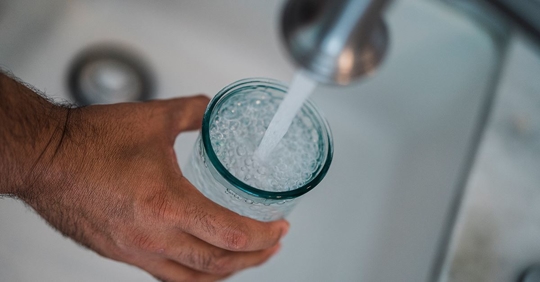
You scrub the white film off your showerhead, rinse the faucet spotless, and two weeks later it’s back. That cycle isn’t a cleaning failure. It’s the minerals dissolved in your water supply, and it won’t stop until you address the source.
We’ve been working in Central Florida homes since 1967, and hard water is one of the most consistent sources of plumbing wear we see. What surprises most homeowners is how much variation exists in Brevard County water depending entirely on where you live and which utility supplies your home. That difference changes what you should actually do about it.
What Actually Makes Water Hard in Brevard County
Hard water isn’t a contaminant in the traditional sense. It’s water that carries elevated concentrations of dissolved calcium and magnesium, two minerals it picks up as it moves through rock and soil. The harder your water, the more of those minerals deposit inside your pipes, appliances, and fixtures over time.
What most Brevard County residents don’t know is that their water source depends heavily on their address. Brevard County Utility Services draws from the surficial aquifer, a shallow groundwater source, and runs it through a lime softening process at the treatment plant specifically to reduce hardness before it reaches your home. The Floridan Aquifer beneath Brevard is brackish in this region and isn’t used for the county’s supply.
The City of Cocoa needed Floridan Aquifer water for its system, but because the aquifer beneath Brevard is too salty, Cocoa located its wellfield in neighboring Orange County instead. Cocoa’s treated water averages 6.7 grains per gallon (GPG) of hardness, which falls in the moderate range on the USGS four-tier classification scale, roughly 115 milligrams per liter, near the top of the moderate category. Melbourne and the communities it serves work with a different source entirely: that system blends treated surface water from Lake Washington with Floridan Aquifer water processed through reverse osmosis, giving it a distinct mineral profile from both the county utility and Cocoa’s supply. If you’re comparing notes with a neighbor across town, you may genuinely be dealing with different water chemistry.
How Hard Water Damages Pipes, Water Heaters & Fixtures
Even at moderate hardness levels, mineral scale accumulates inside plumbing over years of use. The process is slow enough that most homeowners don’t notice it until the damage is already measurable.
When water heats up or slows down inside a pipe, dissolved calcium and magnesium shift from liquid to solid, depositing on interior pipe walls. Over time, those deposits narrow the usable diameter of the pipe. A pipe that’s lost meaningful interior space to limescale moves less water at lower pressure, a drop that’s usually most noticeable at fixtures farthest from the main line or on upper floors.
Water Heater Sediment
Conventional storage water heaters take a particular hit from hard water. Mineral sediment settles at the bottom of the tank, sitting between the heating element and the water above it. The unit has to run longer to transfer the same amount of heat, which shows up on your energy bill and shortens the heater’s working life. A heater that pops, rumbles, or takes noticeably longer to recover after heavy use is often signaling a sediment problem before anything has actually failed.
Fixture & Valve Wear
Calcium deposits collect around faucet aerators, showerhead nozzles, and toilet fill valves at a smaller scale, but the effect compounds. Clogged aerators produce uneven spray and drips. Fill valves coated in mineral scale don’t seat cleanly, a common cause of a toilet that runs continuously without any obvious mechanical break. These jobs look like fixture failures but often trace back to water chemistry.
If you’re seeing scale buildup, dropping pressure, or a water heater that seems to be working harder than it should, Dial Duron Service Co. can assess your plumbing, evaluate your water heater’s condition, and walk you through treatment options that match your actual water chemistry, with no added fees for evening or weekend calls. Reach us at (321) 341-3625.
Recognizing Hard Water Damage Before It Gets Expensive
White or chalky deposits around faucets, showerheads, and drain openings are the most visible sign. They’re not just cosmetic: the same mineral chemistry building up on surfaces you can see is also building up inside pipes and appliances you can’t. These signs are worth paying attention to as well:
- Dropping water pressure. A gradual reduction in flow, particularly at upper-floor fixtures or those farthest from the main supply, often means scale has narrowed pipe diameter somewhere upstream.
- Soap that won’t lather. Hard water interferes with soap chemistry, leaving a filmy residue on skin, hair, dishes, and glassware. If you’re using more soap than you used to and still not getting clean results, hardness is likely the explanation.
- A water heater that runs constantly or produces less hot water. Both point to sediment insulating the tank floor and reducing heating efficiency.
Testing & Treating Hard Water in Your Home
Before spending money on treatment equipment, get an actual hardness reading for your specific supply. Every public utility is required under the Safe Drinking Water Act to publish a Consumer Confidence Report, which includes hardness data for the water leaving the treatment plant. Cocoa’s and Brevard County’s reports are publicly available. If your home is on a private well, a water test from a licensed lab gives you the same baseline. Homes served by county-treated water that has gone through lime softening may read lower than homes on private wells or a different municipal supply. Buying a treatment system before you know your actual number means guessing at a solution.
Whole-Home Water Softeners
A whole-home water softener works through ion exchange, swapping calcium and magnesium ions for sodium ions as water passes through a resin tank. Softened water no longer carries the minerals that form limescale, so new scale stops accumulating in pipes, appliances, and fixtures from the point of installation forward. The softener periodically flushes the resin with a salt brine to recharge it. One important clarification: a softener prevents new scale but won’t dissolve deposits that have already formed inside pipes or a water heater tank.
Addressing Existing Sediment
Flushing a water heater tank removes the mineral sediment settled on the floor of the unit, restoring some of the heating efficiency that scale has reduced and extending the heater’s working life. If a home has older galvanized or copper pipes with significant interior buildup, we can assess whether descaling or section replacement makes more sense than waiting for a pressure failure.
What to Do with This Information
The right response to hard water in Brevard County depends on your actual water source and hardness level. A home served by Brevard County Utility Services, which already treats for hardness, starts in a different position than a home on Cocoa’s supply or a private well. Pulling your utility’s Consumer Confidence Report gives you the concrete starting point that makes every other decision more reliable.