
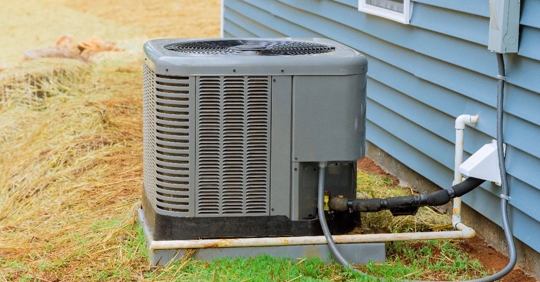
An outdoor condenser can begin corroding long before it stops cooling your home. In coastal communities like Cape Canaveral, Cocoa Beach, Satellite Beach, Indialantic, and Melbourne Beach, salt particles settle on metal AC components every time moist ocean air moves inland. That exposure compounds quietly over months and years before the damage becomes obvious.
That exposure is different from ordinary dust, rain, or inland humidity. At Dial Duron Service Co., we’ve served Central Florida since 1967, and our NATE-certified HVAC technicians, EPA-certified refrigerant professionals, and fully licensed and insured team understand that salt air affects AC systems in ways homeowners often don’t see coming.
Why Salt Air Is Particularly Hard on AC Systems
Salt air corrosion happens when airborne salt combines with moisture on metal surfaces and accelerates their chemical breakdown. The outdoor condenser has several vulnerable points: aluminum fins, copper tubing, steel cabinet panels, fasteners, and electrical components.
Brevard County’s shoreline runs from Jetty Park toward Sebastian Inlet, so homes closer to the Atlantic face more direct salt exposure than those farther inland. Properties near the Indian River Lagoon can also experience persistent humidity that keeps residue on equipment from drying quickly. AC equipment manufacturers note that outdoor units in coastal settings need more frequent attention than those in less corrosive environments, and that periodic washing of exposed surfaces and coils can help. The right approach depends on the unit’s manufacturer instructions, its location, and its current condition.
Which Components Salt Air Can Damage
Corrosion doesn’t affect every part of an AC system the same way. Some damage appears on the cabinet surface, while other problems develop inside the electrical compartment or around refrigerant lines.
Condenser Coils, Fins & Copper Tubing
The condenser coil contains tubing that carries refrigerant, the fluid that moves heat out of your home. Aluminum fins wrap around that tubing and increase the surface area available to release heat. When salt residue causes pitting, flaking, or bent fins, airflow and heat transfer both decline. Copper tubing and its connections can corrode as well. Not every discolored line signals a refrigerant leak, but corrosion around a line connection, oily residue, reduced cooling, or ice on refrigerant components all warrant a professional evaluation.
Cabinet Hardware & Electrical Parts
Rust streaks on cabinet panels, deteriorated screws, and weakened fasteners may start as surface issues, but they make future service harder and create openings for further damage. Salt can also affect wiring connections and the electrical contactor, the switch that sends power to the outdoor unit’s compressor and fan. Corroded electrical contacts can contribute to hard starts, intermittent operation, repeated shutdowns, or breaker trips. Those symptoms have several possible causes, so they shouldn’t be treated as proof of one specific failure. Opening the electrical compartment without first disconnecting power is a genuine safety risk.
Signs Your Outdoor Unit May Have Salt Damage
Visible residue is useful information, but it doesn’t tell the whole story. A unit with white or gray deposits on the exterior might need only routine cleaning, while hidden corrosion near coils or electrical connections may require more careful testing to uncover.
Signs worth watching for:
- Surface deposits: White or gray buildup on cabinet panels, coil surfaces, or fasteners
- Metal deterioration: Flaky aluminum fins, rust streaks, corroded screws, or peeling cabinet paint
- Line connection changes: Corrosion or staining around copper tubing connections
- Cooling changes: Slower cooling, longer cycles, or a system that runs more often than usual
- Electrical concerns: Unusual starting behavior, repeated shutdowns, or a tripping breaker
Weak airflow from supply vents can stem from a dirty filter, duct issue, blower problem, frozen coil, or another condition. It also compounds the strain on an outdoor unit that’s already struggling to release heat. Homeowners can safely remove leaves and debris from around the condenser and flag visible corrosion during a maintenance visit. Pitted coil surfaces, damaged fins, deteriorated wiring, suspected refrigerant loss, and electrical interruptions should be left to a licensed HVAC technician.
Maintenance Practices for Coastal Brevard Homes
Salt exposure is an ongoing maintenance consideration, not a one-time cleanup after a storm. The goal is to limit residue buildup, preserve airflow around the condenser, and catch corrosion before it affects cooling or electrical operation. How often that maintenance happens should reflect the unit’s distance from the coast, its exposure to wind-driven spray, and its visible condition. A beachfront property and a home farther west in the county don’t necessarily need the same schedule.
Safe homeowner steps:
- Clear the surrounding area: Remove leaves, grass clippings, and stored items that block airflow around the outdoor unit
- Check the air filter: Replace or clean the indoor filter according to the system manufacturer’s guidance
- Redirect sprinkler spray: Keep irrigation, especially treated water, from repeatedly hitting the condenser
- Use gentle rinsing only when appropriate: Follow manufacturer guidance for periodic freshwater washing of exposed outdoor surfaces and coils
- Document changes: Note new rust, residue, unusual noise, or shifts in cooling performance
Pressure washing can bend delicate aluminum fins and drive water into areas where it doesn’t belong. Coil cleaning, fin inspection, electrical testing, refrigerant checks, condensate inspection, and corrosion assessment all belong in a professional visit, where the technician can disconnect power and evaluate the equipment safely.
When to Call for Maintenance or Repair
Schedule an evaluation when corrosion becomes visible, cooling performance drops, or the system starts showing electrical symptoms. It’s also worth having the unit checked after significant storm exposure or flooding near the equipment, especially if debris or standing water reached the condenser. Unit age matters, but condition matters more than any fixed replacement timeline. A technician can inspect coil condition, airflow, cabinet integrity, electrical connections, drainage, and refrigerant status to determine whether maintenance, repair, or a replacement conversation makes sense.
For a coastal AC maintenance evaluation, Dial Duron Service Co. provides residential and commercial HVAC service throughout Brevard County with NATE-certified technicians and EPA-certified refrigerant professionals. We’re also available 24/7 for urgent heating and cooling concerns. Call us at (321) 341-3625.